




 Show all photos in album
Insert for comparison
We will identify your pest
Add pictures of this species
Show all photos in album
Insert for comparison
We will identify your pest
Add pictures of this species
Cryphonectria parasitica
Chestnut blight
Description
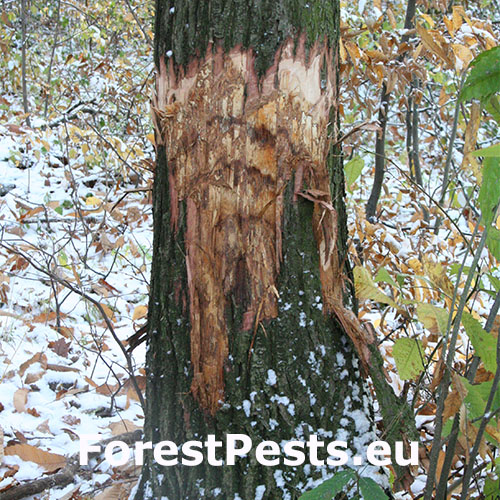
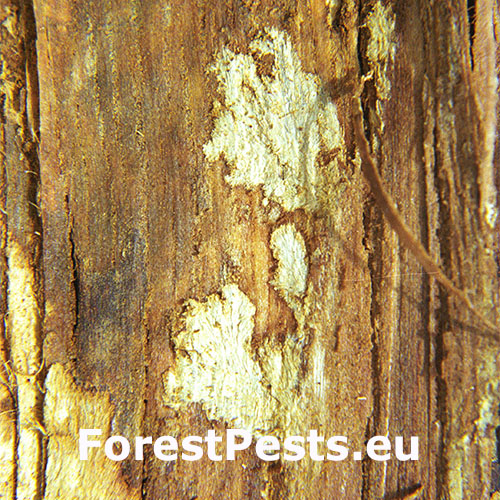
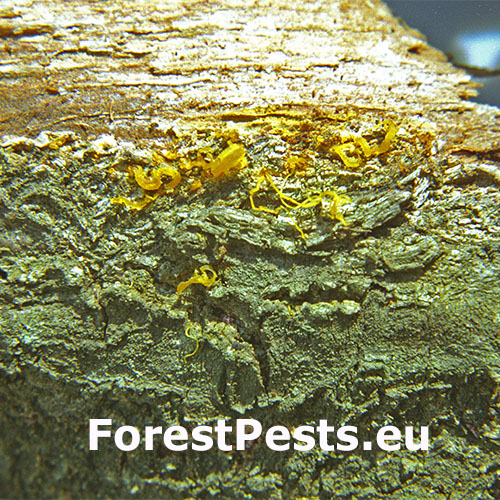
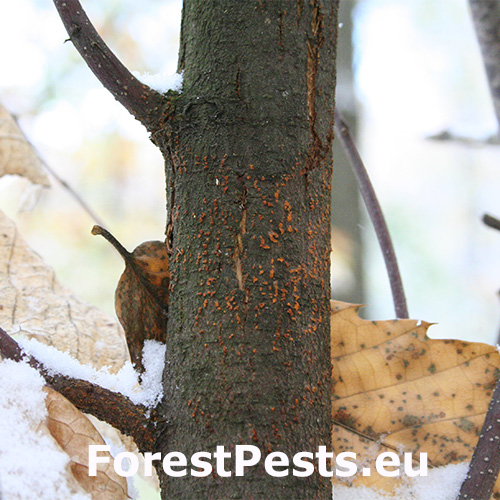
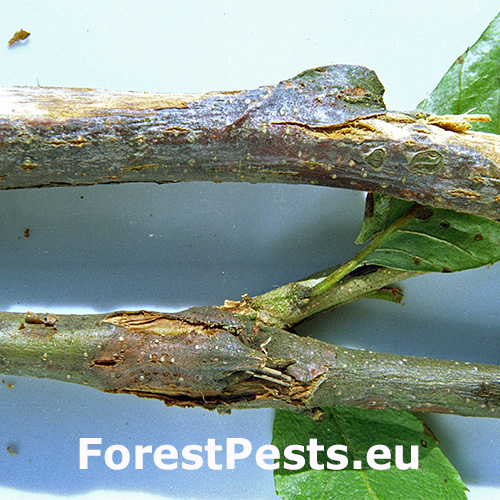
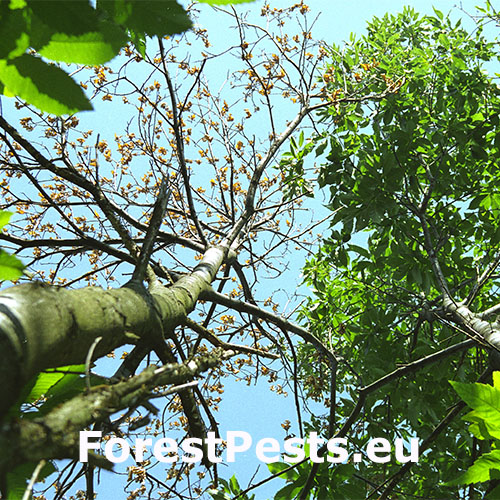
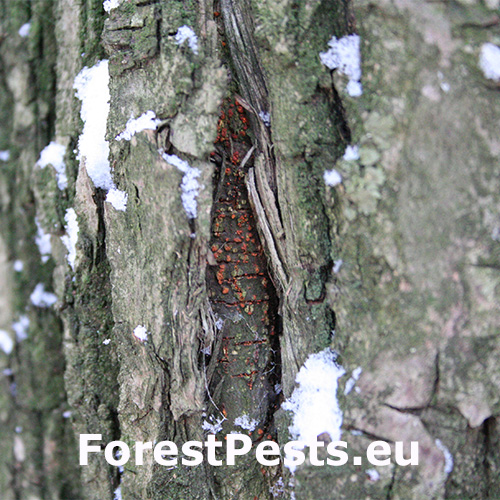
Bark is infected through wounds. With time, ochre to orange pillows of pycnidia are formed at the site of infection from which arise conidia stalks. Then, sexual perithecia of the same colour to red are formed. Infected bark cracks and typical canker wounds are created. Under the bark there is an ochre-white fan-shaped syrrocium. The part of the branch or the trunk above the infection site dies back. In the USA, the fungus was discovered for the first time in 1904 and by the 1950’s American chestnuts (Castanea dentata) were nearly extinct in almost 100% of the area of its autochthonous distribution. In Europe, the disease was found for the first time in 1925 in Belgium and in England, later it was also found in Central Europe – former Yugoslavia, Hungary, Czech Republic, Slovakia, and other countries. This fungus is one of the most serious pests of chestnuts tree in Europe.
Symptom
The infected bark cracks, creating characteristic cancerous wounds.
Tree Species: Chestnut
Part of a plant- attacked: Tree trunk, Branch
Pest significance: Very harmful
Pest Category: Fungi
Invasive Species: Yes
Present in EU: Yes
Add comment: Cryphonectria parasitica
Location map: Cryphonectria parasitica
Legend:

Expert verified points

Unverified points
Observed by users on these tree species
Similar damage

Beech bark disease

Cryptostroma corticale

Dutch elm disease


