




 Show all photos in album
Insert for comparison
We will identify your pest
Add pictures of this species
Show all photos in album
Insert for comparison
We will identify your pest
Add pictures of this species
Coraebus florentinus
Oak burncow
Description
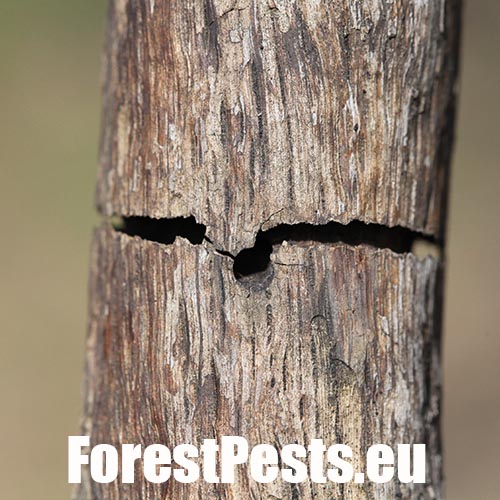
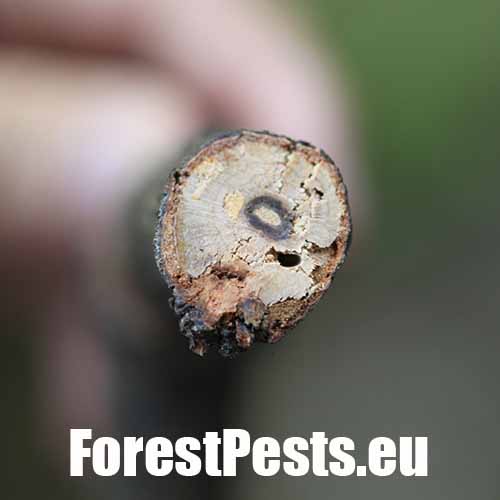
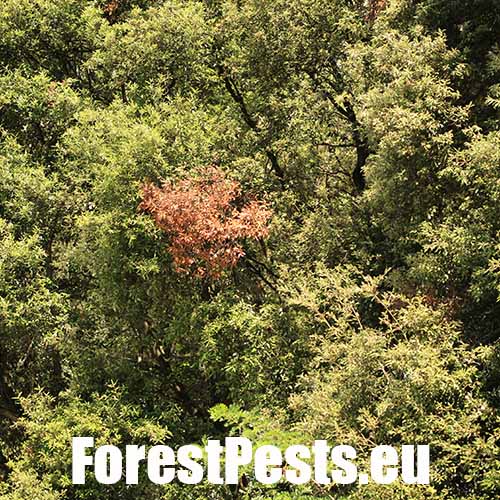
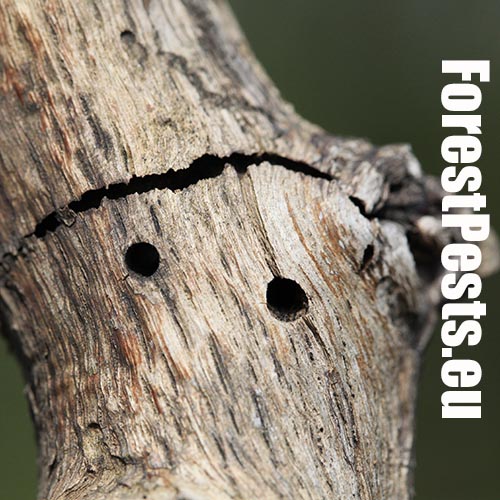
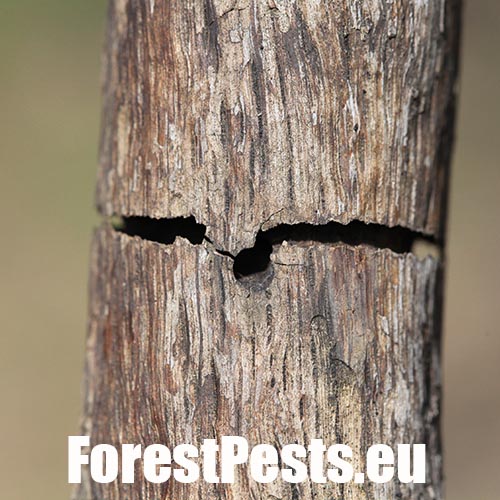
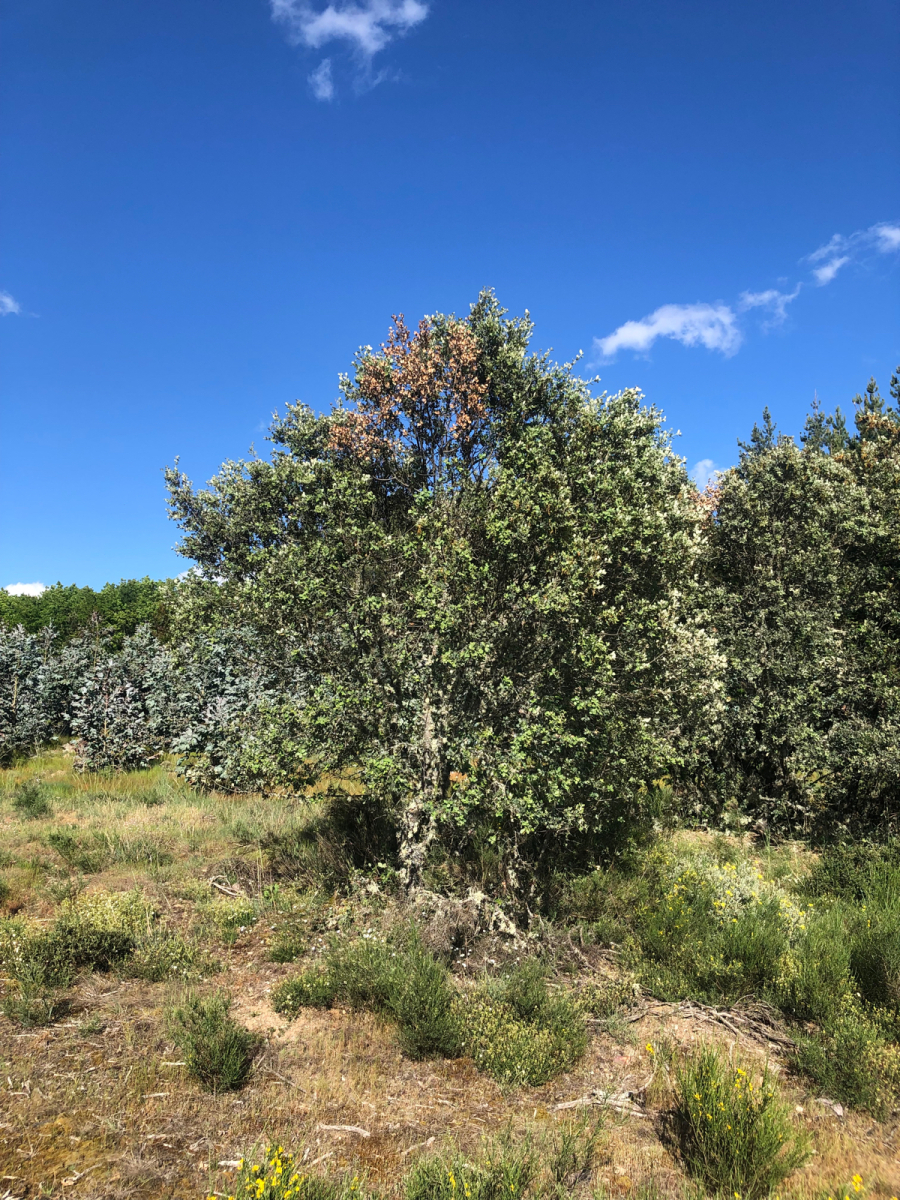
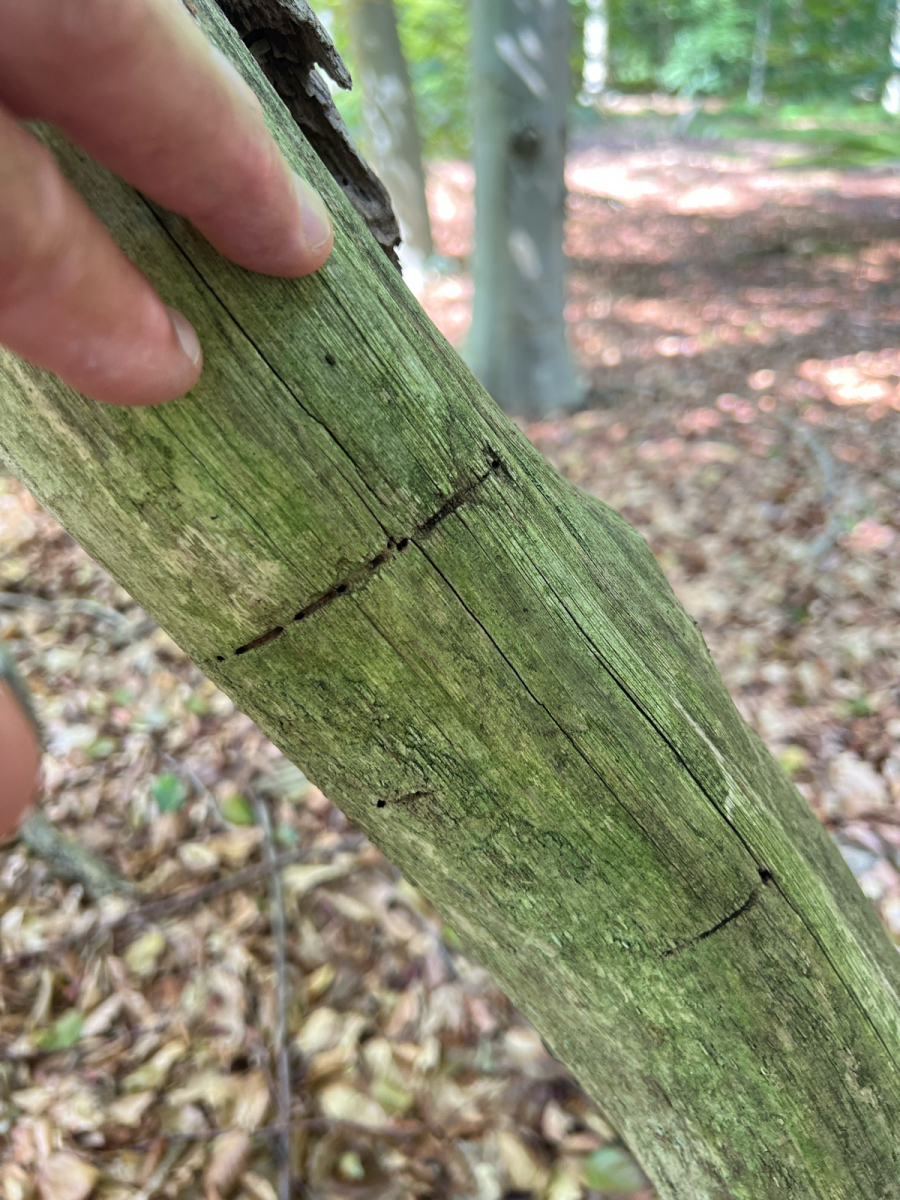
Attractive and colouful beetle. Develops for two years. Host plants are oaks, preferring grove-like stands in dry habitats and at forest edges. Adults fly in June–July, can be found in the crown of the host plant. Females oviposit on young twigs. The hatched larvae bore into the twig and chew long spiral tunnels in the sapwood (so called “death-ring”), reaching 1 m in length. The attacked branches often die. Widespread in oak forests of mountainous and hilly regions, but rarely seen due its cryptic way of life. More common in warm, southern regions. Also other members of that genus live in Europe, Coraebus rubi, C. elatus etc. If occur in large numbers, these species can reduce the vitality of trees in the forest. In parks, they cause unwanted die back of branches. They prefer southern, warm locations. Similar damages can be caused also by Coraebus undatus.
Symptom
Spiral tunnels under the bark and in the sapwood of branches.
Tree Species: Oak
Part of a plant- attacked: Branch
Pest significance: Less harmful
Pest Category: Insects
Invasive Species: No
Present in EU: Yes
Add comment: Coraebus florentinus
Location map: Coraebus florentinus
print viewLegend:

Expert verified points

Unverified points
Observed by users on these tree species
Most sightings of the species

Last observations
There are a total of 2 observations of the species in the system

Coraebus florentinusOak burncow
Jer Nusse
Number of votes: 0
Published: 6.8.2024

Coraebus florentinusOak burncow
Fernando
Number of votes: 0
Published: 15.5.2023
Similar damage

Metallic wood-boring beetle

Pit oak splendour beetle

European oak borer


