




 Show all photos in album
Insert for comparison
We will identify your pest
Add pictures of this species
Show all photos in album
Insert for comparison
We will identify your pest
Add pictures of this species
Cephalcia abietis
Spruce webworm
Description
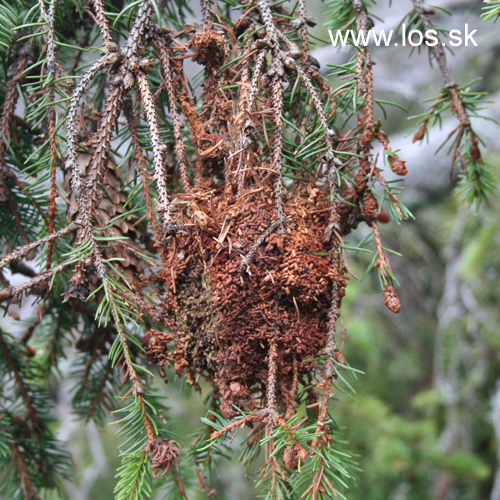
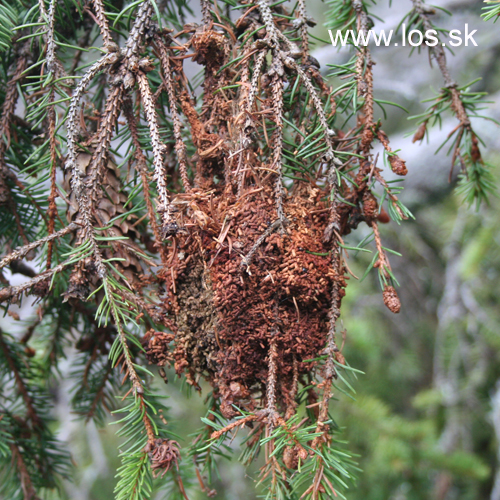
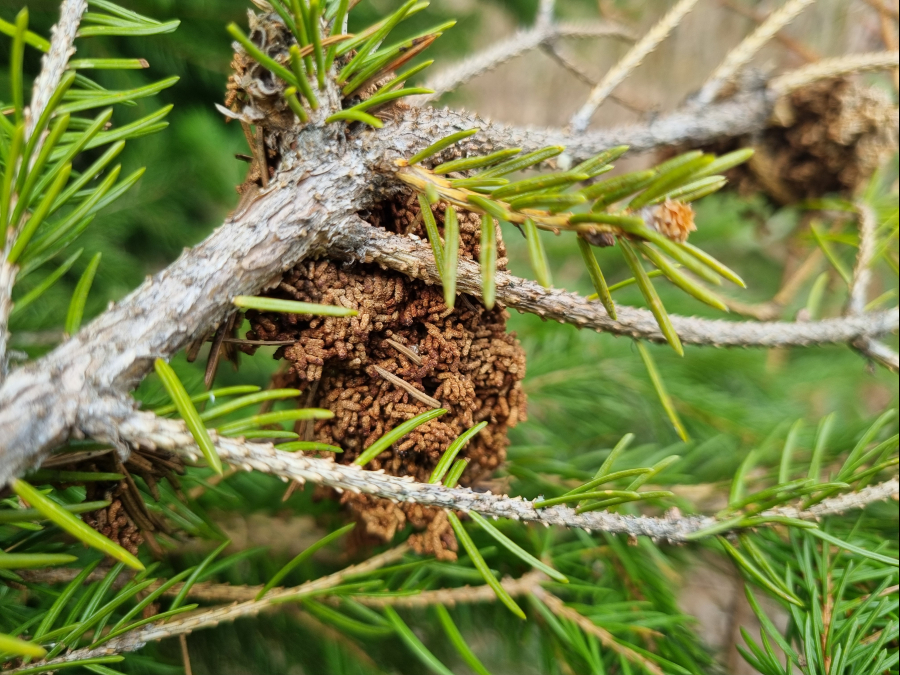
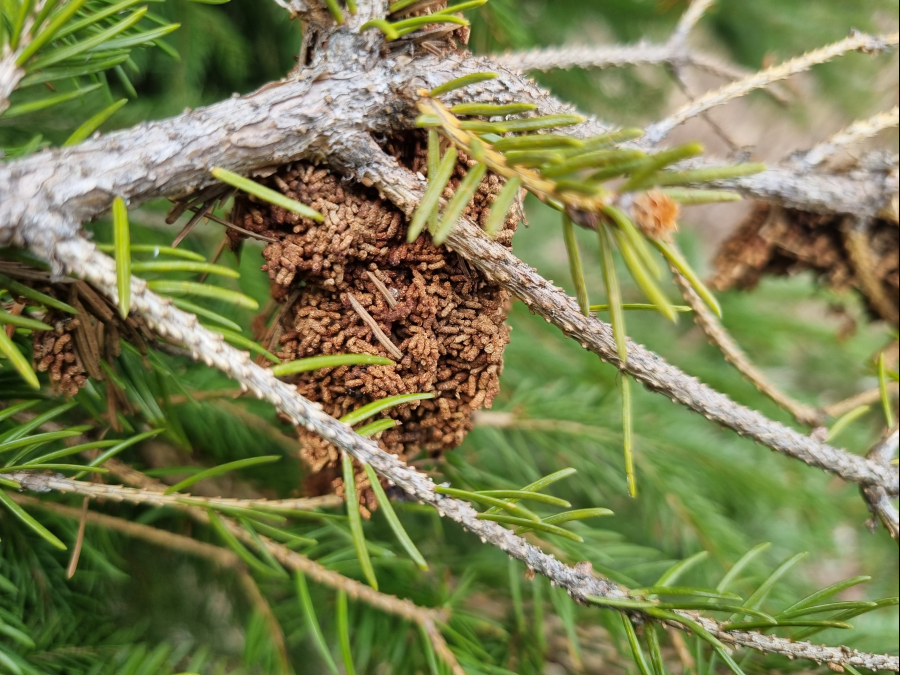
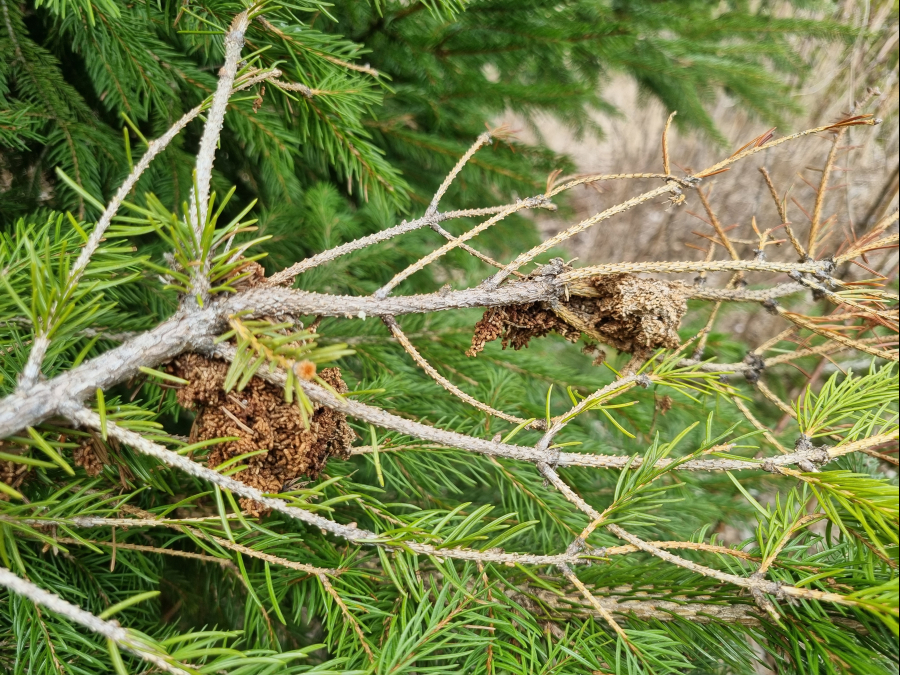
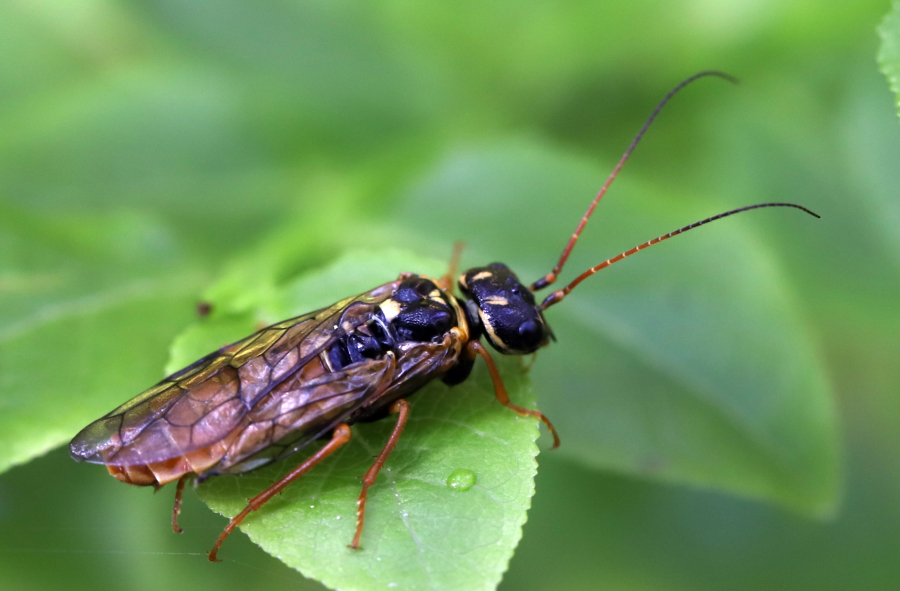
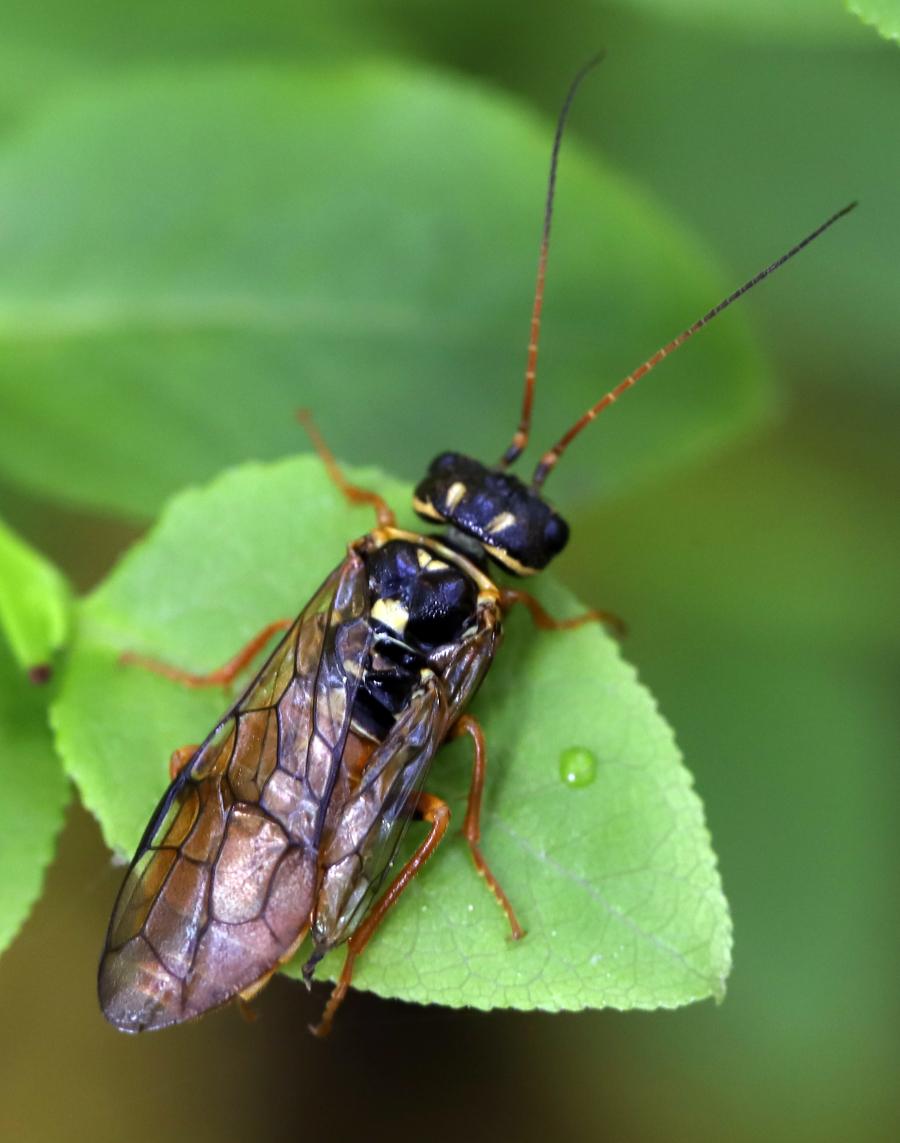
The males occur in late May and June. They are more active than females. After mating the females lay 10–12 eggs in groups in the tree canopy. The eggs are laid on the tree needles in linear or cluster arrangements. The hatched larvae become active, spinning fine silk into a nest to live in. The larval frass normally aggregates inside. The larvae are hairless, light green and 15–18 mm long in maturity. In September they burrow in the ground litter to spend 1–3 years in dormancy and eclose in spring. The pest’s primary targets are aged spruce stands (over 60 years) in highland areas. Infested parts of tree canopy turn rusty brown and the webby pouches with frass are visible from a distance. The spruce webworm is a dangerous pest of spruce monocultures causing serious economic losses to these stands.
Symptom
The infested parts of the crowns are rusty brown in color and bags with needles and droppings are also visible from a distance.
Tree Species: Spruce
Part of a plant- attacked: Leaf / Needle
Pest significance: Very harmful
Invasive Species: No
Present in EU: Yes
Add comment: Cephalcia abietis
Location map: Cephalcia abietis
print viewLegend:

Expert verified points

Unverified points
Observed by users on these tree species
Most sightings of the species

Last observations
There are a total of 2 observations of the species in the system

Cephalcia abietisSpruce webworm
Katarína Bobríková
Number of votes: 0
Published: 26.4.2025
Similar damage

Spruce bark tortrix Cydia pactolana

Small spruce sawfly

European spruce budmoth

