


 Show all photos in album
Insert for comparison
We will identify your pest
Add pictures of this species
Show all photos in album
Insert for comparison
We will identify your pest
Add pictures of this species
Catocala nymphaea
Nymphaea moth
Description
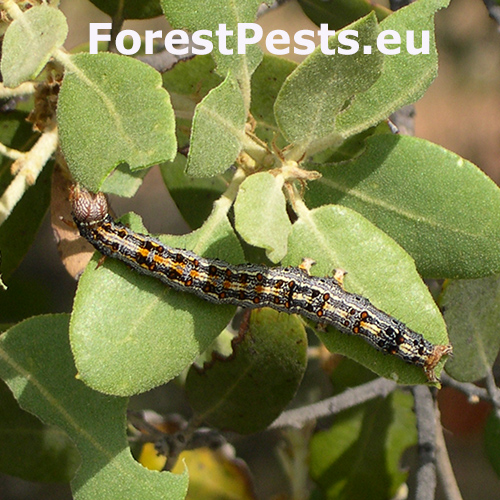
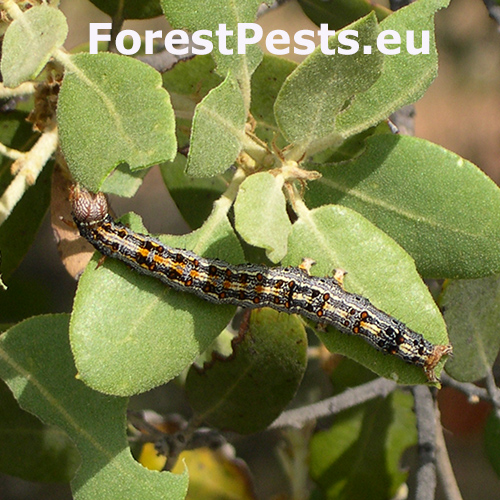
Catocala nymphaea, known as the nymphaea moth, belongs to the family Erebidae. It is primarily distributed in the Mediterranean region, inhabiting evergreen forests and maquis dominated by Quercus species. Its range includes southern France, Greece, Italy, North Africa, and extends to Anatolia and parts of Central Asia. Rare sightings have been recorded further north in Europe.
The larvae feed on Quercus ilex and Q. coccifera, causing defoliation of these evergreen oaks. Larval feeding can reduce the photosynthetic capacity of the host tree, particularly when infestations are intense. Eggs overwinter on the host tree, with larvae emerging in spring and feeding through early summer. Adults, which have a wingspan of 54–62 mm, are active from July to September.
Symptom
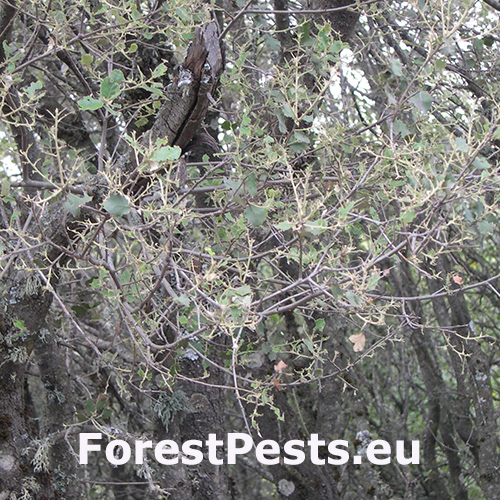
Infested trees exhibit chewed leaves, particularly on evergreen oaks like Quercus ilex. Leaf edges are irregularly damaged, and severe infestations may lead to partial defoliation.
Tree Species: Oak
Part of a plant- attacked: Leaf / Needle
Pest significance: Less harmful
Pest Category: Insects
Invasive Species: No
Present in EU: Yes
Add comment: Catocala nymphaea
Location map: Catocala nymphaea
Legend:

Expert verified points

Unverified points
Observed by users on these tree species
Similar damage

Leopard moth

Pale brindled beauty

Nun moth

