



 Show all photos in album
Insert for comparison
We will identify your pest
Add pictures of this species
Show all photos in album
Insert for comparison
We will identify your pest
Add pictures of this species
Avalanches
Avalanches
Description
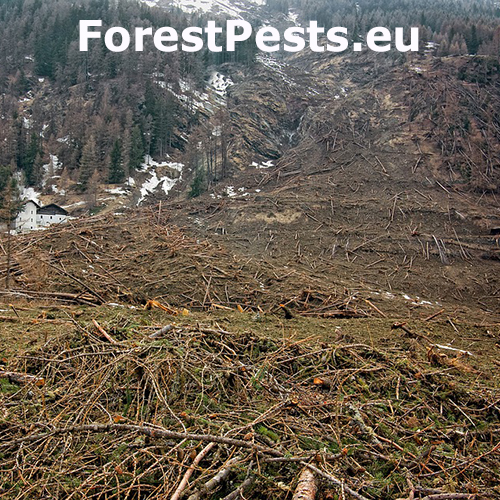
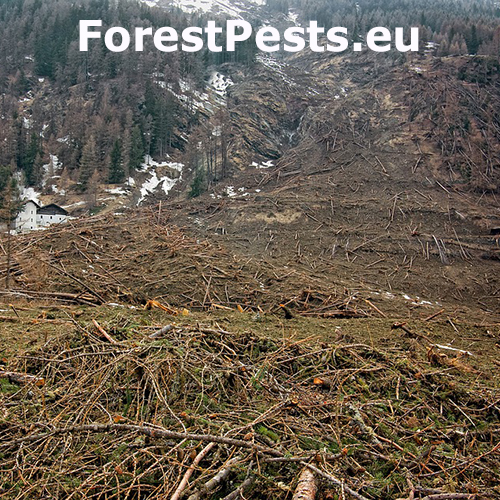
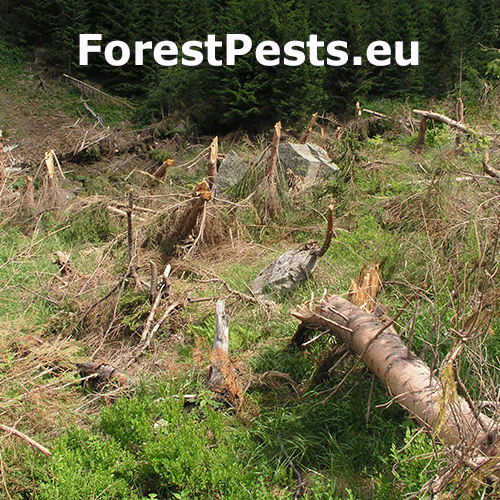
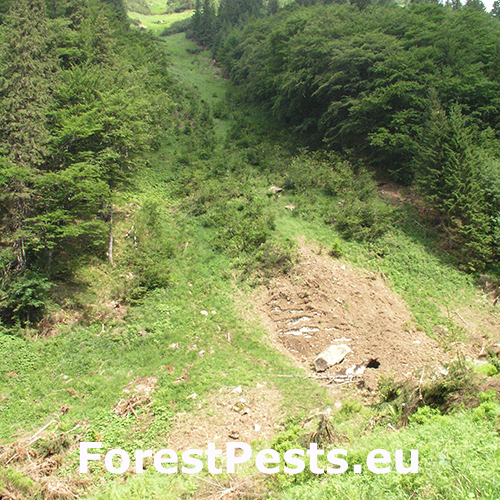
Avalanches represent rapid landslide of snow, or rocks, rubble and soil down the slope. There are rolling, sliding, dusty, ground and surface avalanches. In general, they usually arise in places where slopes of the terrain are over 20º. Avalanches are most often formed in winter or early spring. They tear down with them layers of snow, gravel, boulders, wood and destroy everything that stands in their way. Due to huge snow weight, avalanches break through wide areas in forest stands, uprooting trees and breaking branches and stems. The nearly surrounding trees are damaged as well. Avalanche damaged stands are exposed to mechanical wind damage. Harmful insects or fungi often infest wounded trees. Trees on the avalanche edges also suffer from bark burns. Subsequently fungal pathogens develop, especially on Norway spruce, stone pine and dwarf pine, under a layer of accumulated avalanche snow.
Symptom
Ripped out trees, broken stems, uproots. In Europe, avalanches are most common in the mountains of Alps and Western Carpathians. The most common symptoms are broken stems, uproots, completely damaged and removed trees. Snow falls into the valley in the downhill direction of the greatest slope, tearing down everything that meets. Marginal trees along the avalanche track become abraded by rolling stones. In avalanche valley, it usually strikes the opposite slope, where also damages or destroys trees.
Tree Species: Pine, Maple, Fir, Spruce, Larch
Part of a plant- attacked: Tree trunk, Roots, Branch
Pest significance: Harmful
Pest Category: Other
Invasive Species: No
Present in EU: Yes
Add comment: Avalanches
Location map: Avalanches
Legend:

Expert verified points

Unverified points
Observed by users on these tree species
Similar damage

Frost

Rime

Wind

