




 Show all photos in album
Insert for comparison
We will identify your pest
Add pictures of this species
Show all photos in album
Insert for comparison
We will identify your pest
Add pictures of this species
Aphis spiraephaga
Wax-banded spirea aphid
Description
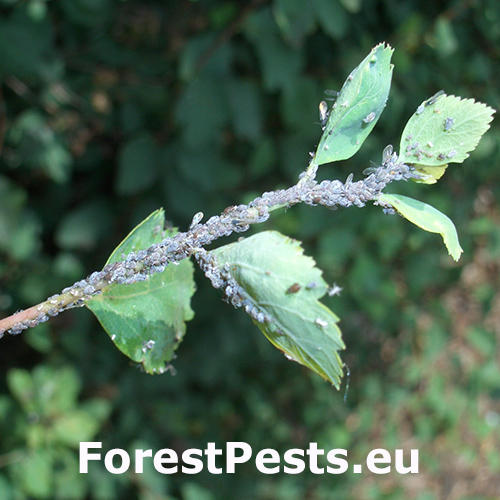
Aphis spiraephaga, known as the wax-banded spirea aphid, is a monophagous species primarily found on plants of the genus Spiraea (family Rosaceae). It lives in dense colonies, particularly on young shoots, flower clusters, and the undersides of leaves. The adult apterae are dark greyish-brown with characteristic transverse bands of greyish-white wax on their dorsal side. Young nymphs are lighter reddish-brown but darken as they grow. This aphid hibernates in the egg stage on older shoots, emerging in spring to infest its primary host plants.
The species mainly feeds on cultivated and wild spirea varieties, such as Spiraea x vanhouttei, S. japonica, and S. media. In some cases, part of its population migrates to secondary hosts, including various herbs like Filipendula and Valeriana. This aphid is distributed across Europe, western Siberia, Iran, Kazakhstan, and Mongolia.
The feeding activity of Aphis spiraephaga causes direct damage by extracting sap, which can lead to the curling and deforming of leaves. Heavy infestations may weaken shoots, reduce plant vigor, and diminish aesthetic value due to the presence of wax, honeydew, and sooty mold development. Ants frequently attend colonies, which can further exacerbate the spread of the infestation.
Symptom
The affected plants have young shoots and the undersides of leaves covered with dense colonies of gray-brown aphids. The leaves are curling and deforming, with visible waxy coatings or black spots.
Tree Species: Spirea spp.
Part of a plant- attacked: Leaf / Needle, Branch
Pest significance: Harmful
Pest Category: Insects
Invasive Species: No
Present in EU: Yes
Add comment: Aphis spiraephaga
Location map: Aphis spiraephaga
Legend:

Expert verified points

Unverified points
Observed by users on these tree species
Similar damage

Rose aphid

Gooseberry aphid

Pistacia horn gall aphid

