





 Show all photos in album
Insert for comparison
We will identify your pest
Add pictures of this species
Show all photos in album
Insert for comparison
We will identify your pest
Add pictures of this species
Aphis sambuci
Elder aphid
Description
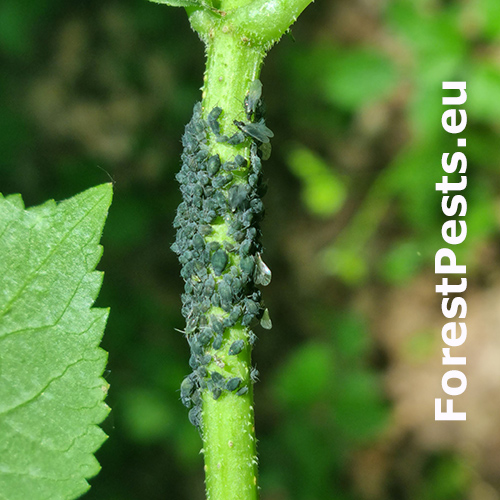
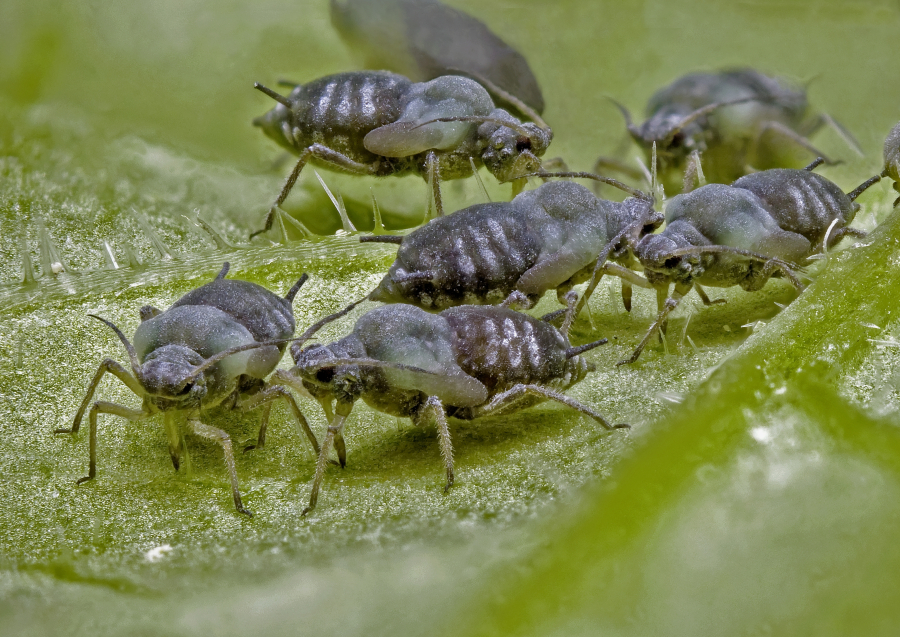
Aphis sambuci, commonly known as the elder aphid, alternates between its primary host, elder (Sambucus nigra), and secondary host plants like docks (Rumex) and campions (Silene). In spring, it forms dense colonies on elder, where it is strongly attended and sheltered by ants, particularly Lasius niger. During autumn, sexual forms appear, and overwintering eggs are laid in the axils of elder buds and bark cracks. These eggs hatch into apterous fundatrices, leading to large, persistent colonies. Winged females, or alates, emerge in later generations and may migrate to secondary hosts. Notably, A. sambuci is well-suited to urban environments, thriving on elder in marginal habitats like gardens, city parks and roadsides.
Infestations often lead to distorted or curled leaves and shoots due to the aphids' feeding activity. The aphids excrete a sticky substance called honeydew, which can cause sooty mold to develop on the plant's surface. This can lead to a black, sooty appearance on leaves and stems. Heavy infestations can weaken plants, resulting in stunted growth and reduced vigor. As aphids feed on plant sap, the leaves may turn yellow and may eventually drop off. Long-term infestations can contribute to the overall decline of plant health, affecting their ability to photosynthesize and grow.
Symptom
Dense colonies of aphids on elder, strongly attended and sheltered by ants.
Tree Species: Elderberry
Part of a plant- attacked: Leaf / Needle
Pest significance: Less harmful
Pest Category: Insects
Invasive Species: No
Present in EU: Yes
Add comment: Aphis sambuci
Location map: Aphis sambuci
print viewLegend:

Expert verified points

Unverified points
Observed by users on these tree species
Most sightings of the species

Last observations
There are a total of 1 observations of the species in the system

Aphis sambuciElder aphid
teuchestes
Number of votes: 2
Published: 25.4.2024
Similar damage

Apple aphid

Black cherry aphid

Currant aphid

