




 Show all photos in album
Insert for comparison
We will identify your pest
Add pictures of this species
Show all photos in album
Insert for comparison
We will identify your pest
Add pictures of this species
Aphis fabae
Black bean aphid
Description
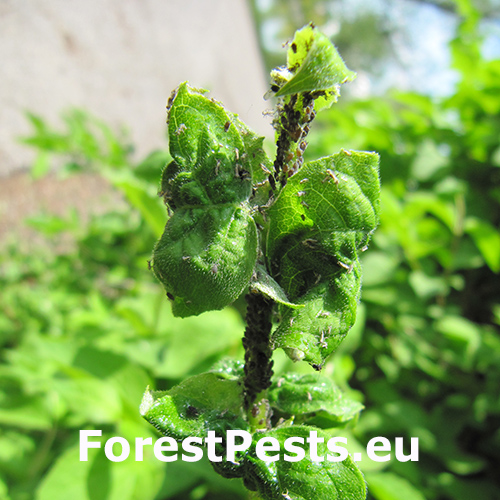
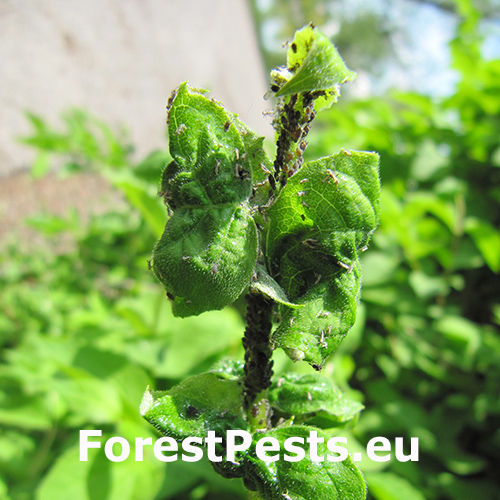
The black bean aphid (Aphis fabae) is a small sap-sucking insect belonging to the order Hemiptera. This species alternates between primary woody hosts (Euonymus europaeus, Viburnum spp., Philadelphus spp.) and secondary herbaceous hosts, including sugar beet, beans, and sunflowers. In spring, wingless females hatch from overwintering eggs and reproduce asexually, rapidly building up large populations on young shoots and leaves. By mid-summer, winged forms appear, which migrate to new plants. In autumn, winged females return to woody hosts to mate and lay overwintering eggs.
Aphis fabae damages host plants by sucking sap, causing leaf curling, deformation, and stunting of shoots. Infestations reduce plant vitality, inhibit growth, and impair aesthetic appearance due to sooty mold developing on honeydew deposits. This species is widespread across Europe, Asia, and North America, thriving in temperate regions. Its significant pest status arises from its ability to transmit harmful plant viruses and form dense colonies.
Symptom
On infested leaves, visible symptoms include curled or deformed young leaves, stunted shoots, and a sticky honeydew coating, often covered with black sooty mold. High populations form dense clusters on stems and leaf undersides.
Tree Species: Spindle, Guelder Rose, Mock-orange
Part of a plant- attacked: Leaf / Needle, Branch
Pest significance: Less harmful
Pest Category: Insects
Invasive Species: No
Present in EU: Yes
Add comment: Aphis fabae
Location map: Aphis fabae
Legend:

Expert verified points

Unverified points
Observed by users on these tree species
Similar damage

Cotton aphid

Black cherry aphid

Apple aphid

