




 Show all photos in album
Insert for comparison
We will identify your pest
Add pictures of this species
Show all photos in album
Insert for comparison
We will identify your pest
Add pictures of this species
Allantus cinctus
Curled rose sawfly
Description
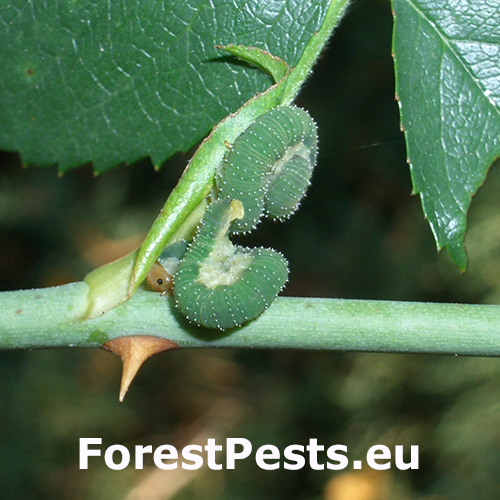
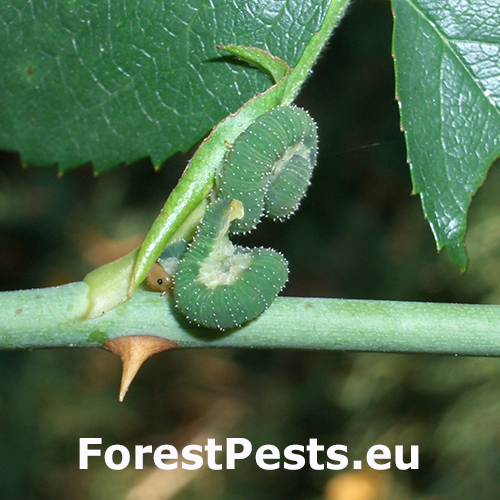
Allantus cinctus, known as the curled rose sawfly, is a sawfly species widespread in Europe, particularly in southern and central regions. It has also been introduced to North America. The larvae feed on plants from the Rosaceae family, including Rosa, Rubus, and Fragaria. Females lay eggs in small incisions on the underside of leaves, and larvae skeletonize leaf tissue, sometimes consuming entire leaves except for the main veins.
Severe infestations reduce plant vitality and significantly affect ornamental plants’ aesthetic value. The larvae are green with white abdominal spots and a yellow head marked with a dark brown stripe. In favorable conditions, two or even three generations per year can develop. Adults emerge in spring and are about 10 mm long, with nearly transparent wings and a black, glossy abdomen featuring a pale band in the middle.
Symptom
Larvae skeletonize leaves, leaving only the main veins intact. Feeding damage results in irregular holes and leaf curling. Pupation inside pruned twigs can cause stem dieback and facilitate fungal infections. In cases of heavy infestation, leaves may be entirely consumed.
Tree Species: Blackberry, Rose
Part of a plant- attacked: Leaf / Needle, Branch
Pest significance: Less harmful
Pest Category: Insects
Invasive Species: No
Present in EU: Yes
Add comment: Allantus cinctus
Location map: Allantus cinctus
Legend:

Expert verified points

Unverified points
Observed by users on these tree species
Similar damage

Apple leaf sawfly

Rose sawfly

Spring usher

