




 Show all photos in album
Insert for comparison
We will identify your pest
Add pictures of this species
Show all photos in album
Insert for comparison
We will identify your pest
Add pictures of this species
Agrilus sinuatus
Sinuate pear tree borer
Description
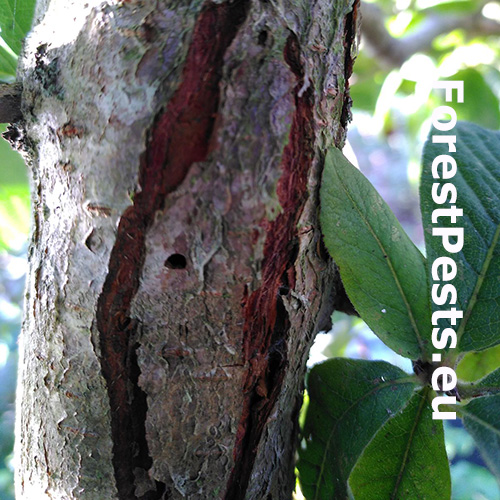
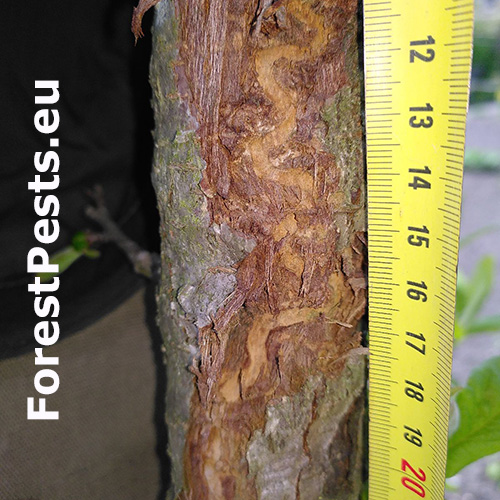
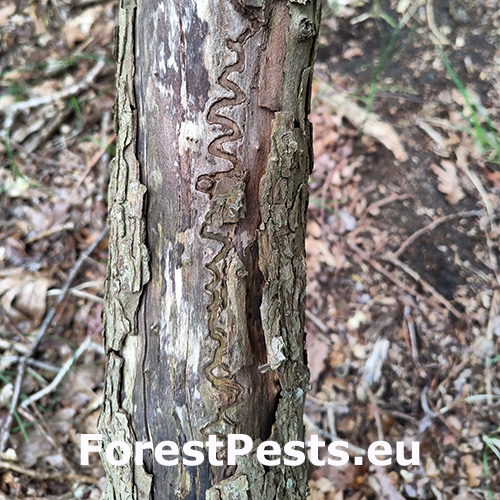
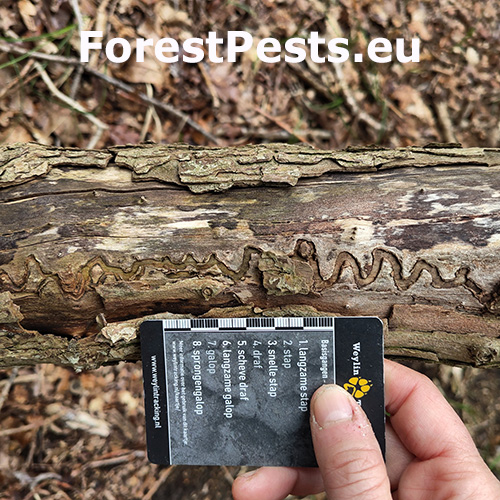
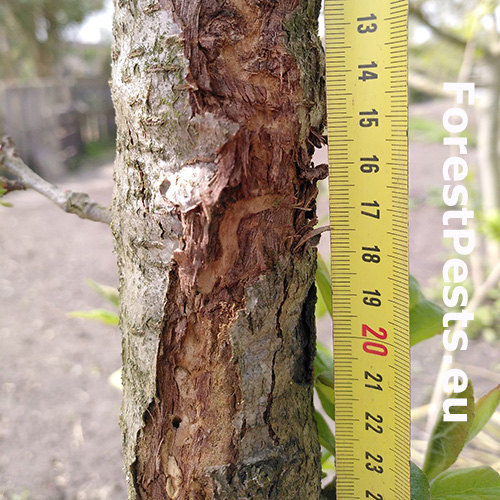
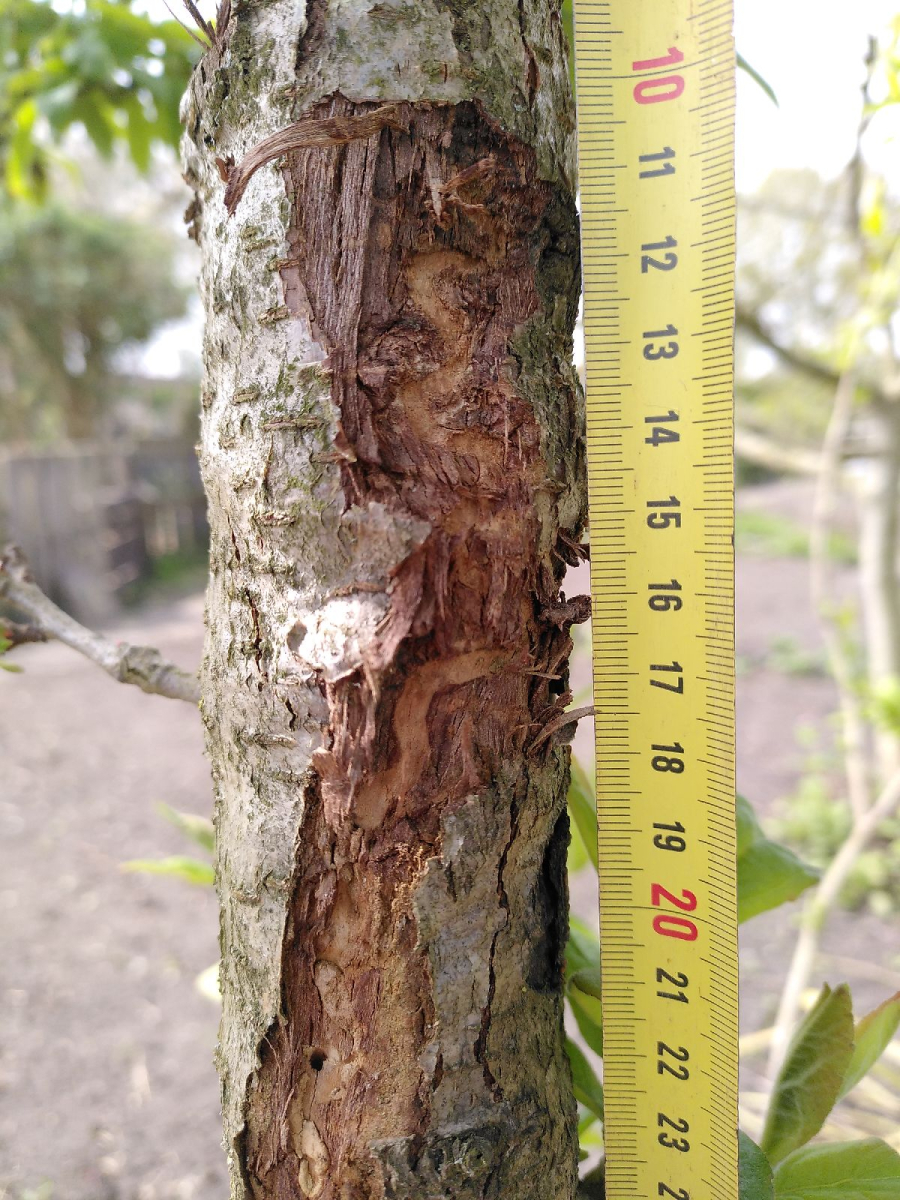
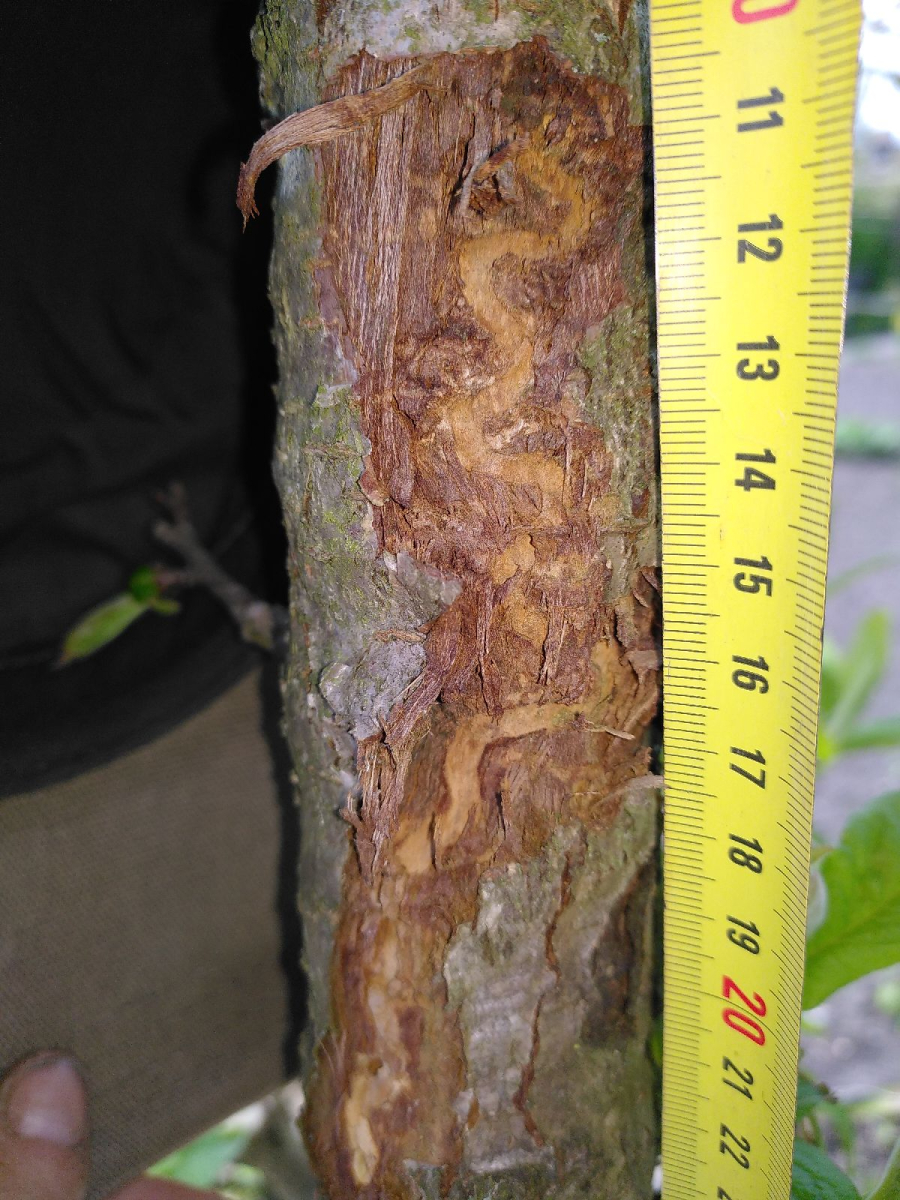
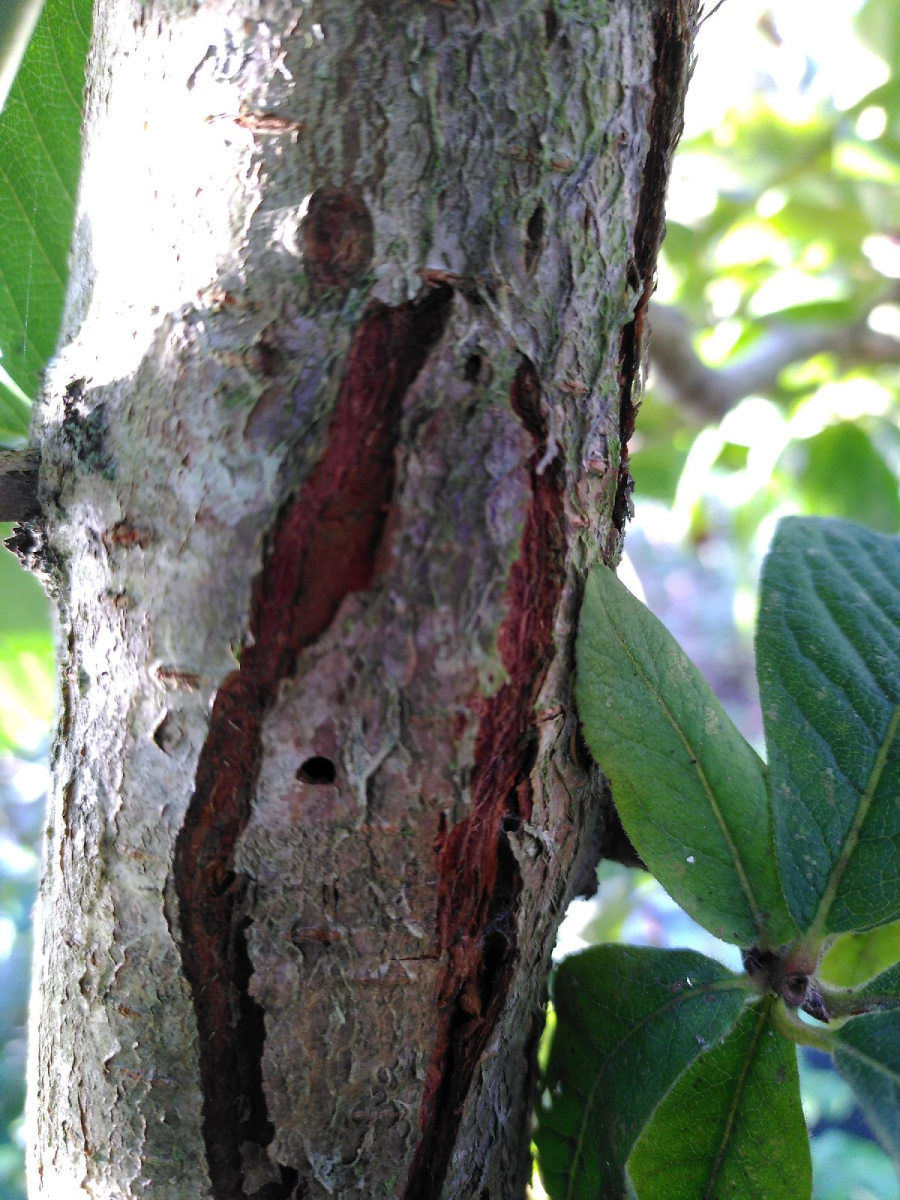
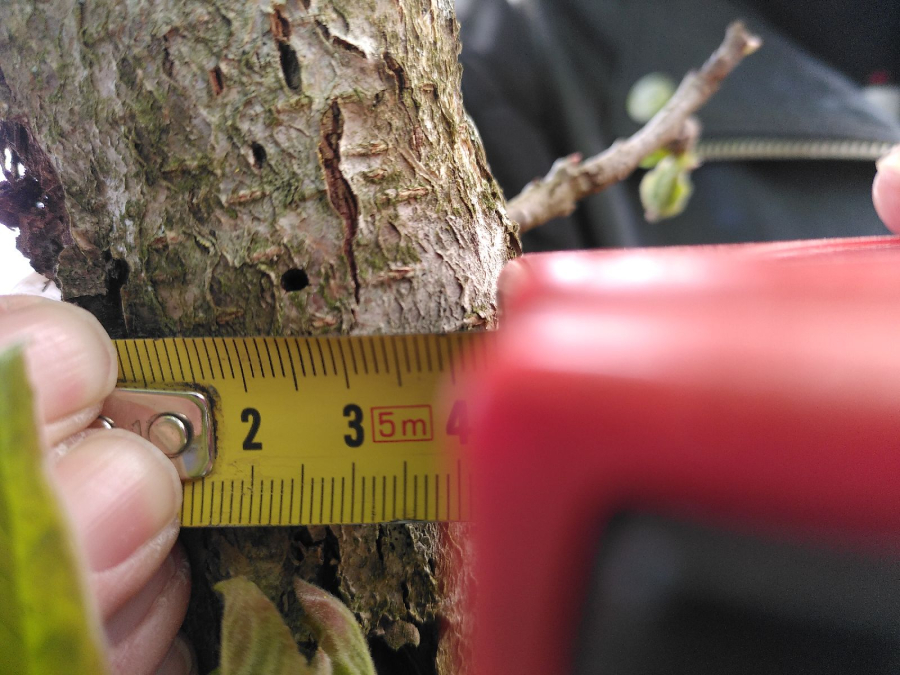
Agrilus sinuatus, the sinuate pear tree borer, is a beetle from the family Buprestidae, approximately 1 cm in size. The adults live from the end of May until the end of July. Females lay 30–40 eggs on the sunny side of young tree trunks or thicker branches, preferring branches or trunks around 5 cm in diameter. Under the bark, larvae create characteristic, strongly wavy, and fairly regular tunnels. The larva pupates in a pupal chamber, which is usually about 2-3 cm below the wood surface. The frass in the gallery system is very fine, and the exit holes are typically "D" shaped.
This species was mentioned in the 19th century, but just as an integral part of the ecosystems of deciduous, xerophilous forests. In the 20th century, it became increasingly known for the damage it causes, especially to ornamental and fruit trees. The population increase is attributed to climate change and the lengthening periods of heat and drought, which favor this thermophilic species. It causes damage to pears (Pyrus pyraster, P. communis), quince (Cydonia oblonga), apple (Malus spp.), plum (Prunus spp.), medlar (Mespilus germanica) etc.
Symptom
Larvae create typically downward-running sinuous galleries just below the bark. The bark of attacked trees becomes necrotic and dies off, creating cracks that provide entry points for various secondary pathogens. Attacked trees can die back.
Tree Species: Cherry, Quince, Hawthorn, Pear, Rowan, Whitebeam, Medlar, Plum
Part of a plant- attacked: Tree trunk
Pest significance: Less harmful
Pest Category: Insects
Invasive Species: No
Present in EU: Yes
Add comment: Agrilus sinuatus
Location map: Agrilus sinuatus
print viewLegend:

Expert verified points

Unverified points
Observed by users on these tree species
Most sightings of the species

Last observations
There are a total of 1 observations of the species in the system

Agrilus sinuatusSinuate pear tree borer
froukje
Number of votes: 0
Published: 16.5.2024

Agrilus sinuatusSinuate pear tree borer
froukje
Number of votes: 0
Published: 16.5.2024

Agrilus sinuatusSinuate pear tree borer
froukje
Number of votes: 0
Published: 16.5.2024

Agrilus sinuatusSinuate pear tree borer
froukje
Number of votes: 0
Published: 16.5.2024
Similar damage

Long-horned beetle Spondylis buprestoides

Shot-hole borer

Flatheaded pine borer


