




 Show all photos in album
Insert for comparison
We will identify your pest
Add pictures of this species
Show all photos in album
Insert for comparison
We will identify your pest
Add pictures of this species
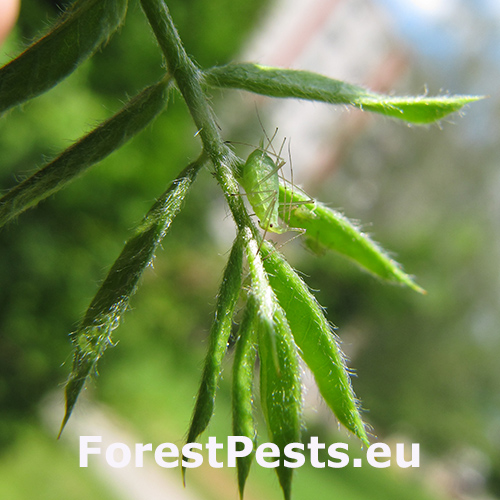
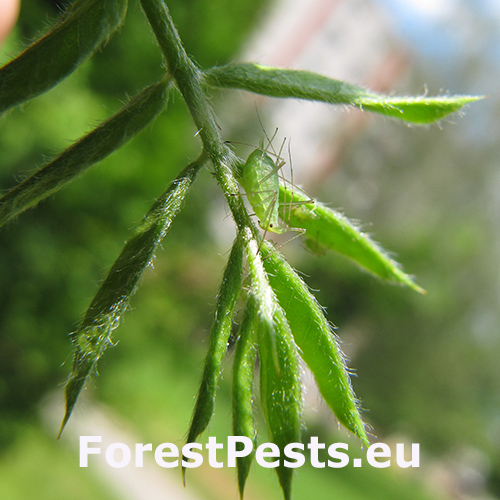
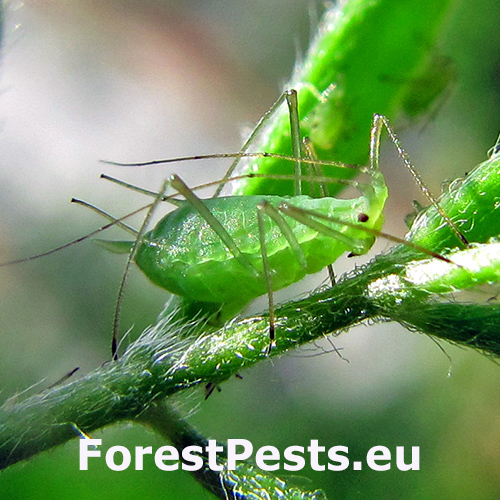
Acyrthosiphon caraganae
Caragana aphid
Description
Acyrthosiphon caraganae, commonly known as the Caragana aphid, is an oligophagous aphid that primarily infests woody plants in the family Fabaceae, particularly species of Caragana (peashrubs) and Colutea (bladder senna). It is also occasionally found on other legumes such as Robinia pseudoacacia, Cytisus, and Indigofera. Originating in Mongolia, it is now widely distributed in temperate regions across the Northern Hemisphere, including Europe, Asia, and North America, where it thrives in parks and gardens.
This aphid forms large colonies on the undersides of leaves, petioles, and young shoots. It feeds by piercing plant tissues and sucking out sap, which weakens the host plant. Prolonged infestations can lead to reduced vitality, distorted growth, and a decline in the overall appearance of the plant. While the damage is usually cosmetic, heavy infestations can significantly impact ornamental and cultivated plants, especially during the growing season. This aphid has several generation per year. The overwintering eggs are laid on twigs, ensuring the pest's lifecycle continues into the following year.
Symptom
Colonies of green aphids with a pale dorsal stripe are found on the undersides of leaves and young shoots. Infested leaves may curl, discolor, and eventually drop prematurely. Sooty mold can develop on honeydew deposits.
Tree Species: Black Locust, Caragana
Part of a plant- attacked: Leaf / Needle, Branch
Pest significance: Less harmful
Pest Category: Insects
Invasive Species: Yes
Present in EU: Yes
Add comment: Acyrthosiphon caraganae
Location map: Acyrthosiphon caraganae
Legend:

Expert verified points

Unverified points
Observed by users on these tree species
Similar damage

Gooseberry aphid

Oleander aphid

Oak aphid

