


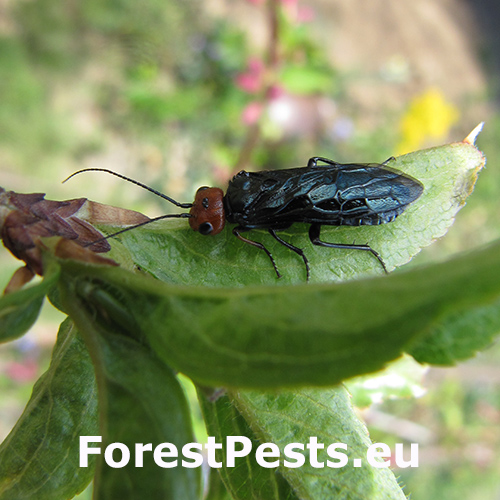
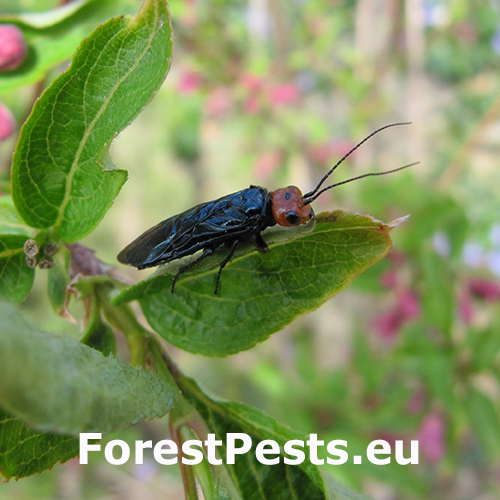
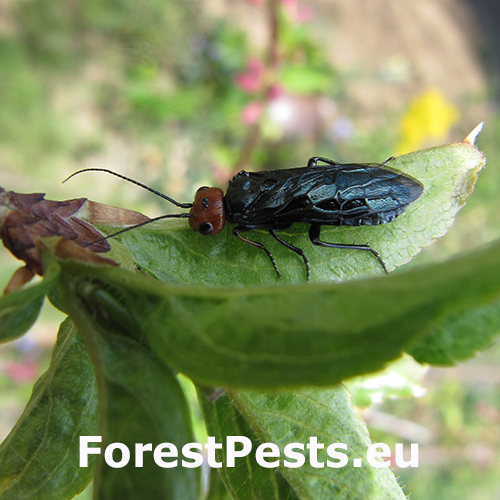
 Show all photos in album
Insert for comparison
We will identify your pest
Add pictures of this species
Show all photos in album
Insert for comparison
We will identify your pest
Add pictures of this species
Acantholyda erythrocephala
Red-headed pine sawfly
Description
Acantholyda erythrocephala, commonly known as the red-headed pine sawfly, is a species of sawfly native to Europe that has also become established in North America. It primarily feeds on pine trees, including Pinus sylvestris, Pinus strobus, and Pinus resinosa. The larvae feed on old needles, constructing silk tubes that become filled with chewed needles, frass, and cast skins. In high densities, they can cause significant defoliation, weakening trees and making them susceptible to secondary pests and pathogens, such as bark beetles. The species has a univoltine life cycle, with larvae overwintering in the soil as prepupae. Adult emergence occurs in late spring, and females deposit eggs in rows along older pine needles. The species is widely distributed across Europe, with reports from various forested regions, particularly where host trees are abundant.
Symptom
Infestation is indicated by partially eaten and discolored old pine needles, often enclosed in silk webbing. As larvae grow, they create silk tubes filled with frass and needle debris. Heavy infestations cause noticeable defoliation, especially in young pine plantations. Symptoms are similar to those of Acantholyda hieroglyphica; however, in the case of A. erythrocephala, there are more needles than frass in the sack constructed by the larva. In A. hieroglyphica, there is more frass present.
Tree Species: Pine
Part of a plant- attacked: Leaf / Needle
Pest significance: Harmful
Pest Category: Insects
Invasive Species: No
Present in EU: Yes
Add comment: Acantholyda erythrocephala
Location map: Acantholyda erythrocephala
Legend:

Expert verified points

Unverified points
Observed by users on these tree species
Similar damage

Spruce webworm

Elm zigzag sawfly

Red-headed pine sawfly

